Both are excellent; the right one depends on your lifestyle, not a ranking. Quartz wins for zero maintenance and consistency. Granite wins for heat resistance and unique character. We install both, and the real choice gets made at your table, not in a brochure.
Key takeaways
- Quartz: non-porous, no sealer, wipes clean with soap and water. Ideal with young children.
- Granite: natural stone, shrugs off heat, one-of-a-kind look, but needs periodic sealing.
- The two overlap on price; the choice is about lifestyle, not price per sq ft.
- The material is half the story; the install (seams, thickness, backsplash) is what makes it last and lifts the room.
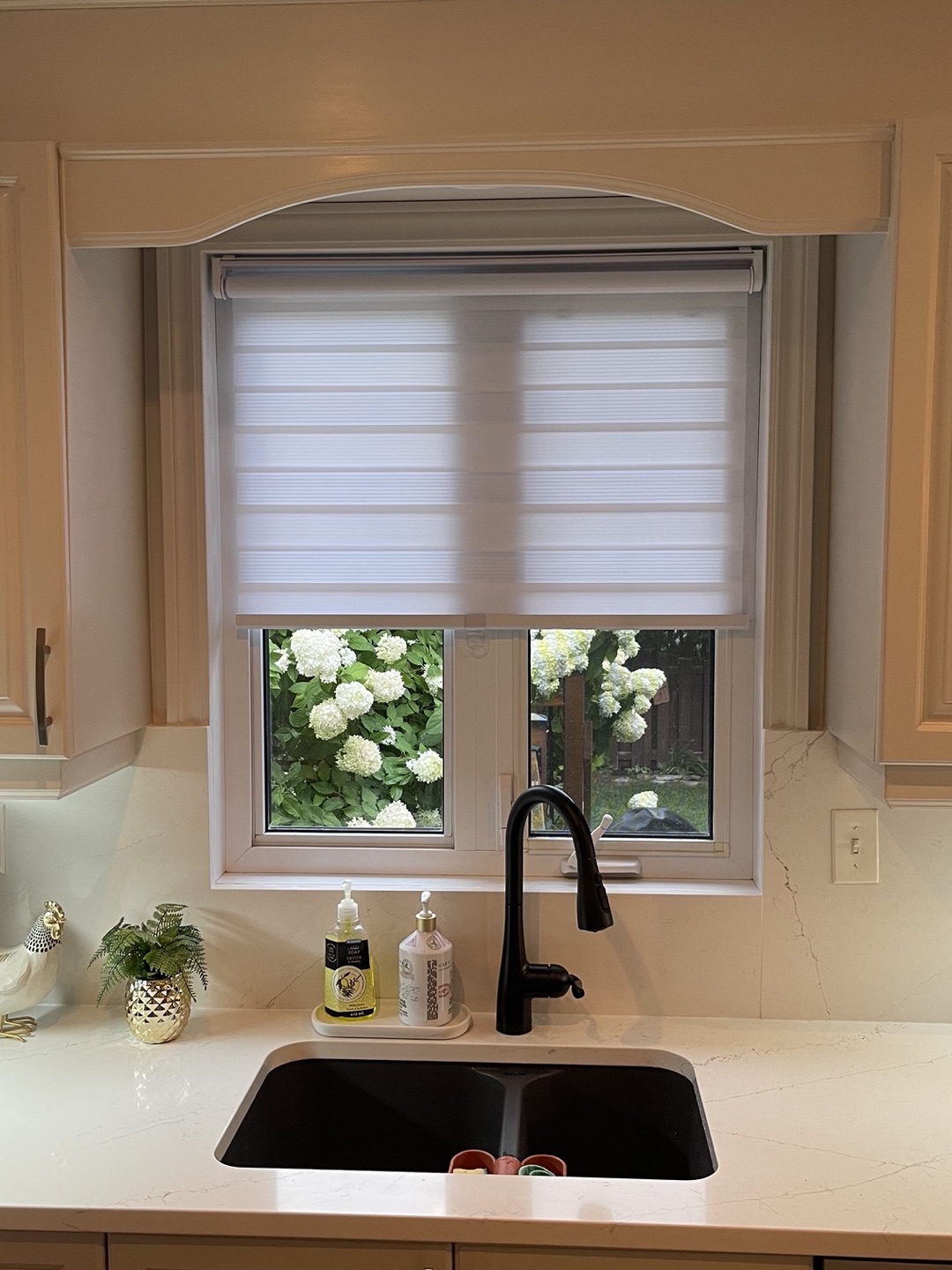
Quartz or granite: which one is really right for you?
The real question isn't "which one is better." Both are excellent. The question is how you actually live in your kitchen.
A countertop stays with you for 20 years. The right call gets made at your table, not in a brochure. At ALTO, we install both. Here's what we truly see in the field, without steering you toward one or the other.
What's the basic difference between quartz and granite?
Granite is natural stone. It's quarried, sliced into slabs, and every piece is unique. Its veins, its crystals, its shifts in tone: no one else has exactly yours.
Quartz is engineered stone. Natural quartz is ground up, then bound with resins and pigments. The result is a uniform, predictable surface, with no two slabs clashing.
That single difference explains almost everything else. Natural stone brings character and a little upkeep. Engineered stone brings consistency and zero sealer. The rest is detail. But in a kitchen, detail is everything.
Quartz vs granite: the comparison table
Here are both materials side by side, on the criteria that truly matter day to day.
| Criterion | Quartz | Granite |
|---|---|---|
| Maintenance | Soap and water, that's it | Periodic sealing + soap and water |
| Heat resistance | Good, but use a trivet | Excellent (natural stone) |
| Scratches and stains | Highly stain-resistant | Scratch-resistant; can stain if unsealed |
| Porosity / sealer | Non-porous, no sealer | Porous, sealer recommended |
| Look / uniformity | Consistent, controlled patterns | Unique, natural veining |
| Durability | Decades | Decades, often more |
| Ecology | Contains resins; industrial process | Natural, but heavy quarrying and transport |
No single row crowns an outright winner. It's the whole picture, crossed with your lifestyle, that settles it.
Price is only part of the story
People often ask which one costs more. The honest answer: the two overlap, and price depends mostly on the slab, the thickness and the cutting.
We won't price it out here: the price depends on your countertop and your project, and it's set at the free in-home estimate. Here, we mostly help you choose.
Because a countertop mismatched to your daily life gets paid for in upkeep, in frustration, or in replacement. Total value is measured over 20 years, not on day-one's invoice.
Which one handles heat better?
Granite takes this round. It's stone; it shrugs off intense heat without flinching. You won't mark it with a hot pot.
Quartz holds heat well, but its resins have a limit. A scorching pan set directly down can leave a yellowed mark, sometimes for good. A trivet solves it in two seconds.
If you cook hard, often, with cast iron coming straight out of the oven, granite forgives more slips. That's a genuine argument, not brochure filler.
Does quartz stain? What about granite?
Quartz is non-porous. Red wine, turmeric, olive oil: nothing soaks in. You wipe, it's gone. That's its headline strength.
Granite, on the other hand, is porous. Left unsealed, it can drink up a stubborn stain. Properly sealed, it resists beautifully. The sealer is renewed periodically, often once a year depending on use.
If the thought of re-sealing wears on you, quartz keeps life simple. If a small yearly ritual doesn't bother you, granite stays flawless for decades.
Quartz or granite: which is greener?
Neither is perfect, let's be honest. Granite is natural, but its quarrying and transport carry a heavy energy cost. A slab shipped from far away travels a lot before it reaches your kitchen.
Quartz avoids quarrying large slabs, but it contains resins and comes out of an industrial process. Its manufacture isn't neutral either.
The real green move here is longevity. A countertop well chosen, well installed, kept for 25 years, beats any material you replace twice. Making things last is our craft, and it's also the most sober choice you can make.
Which one should you choose for your lifestyle?
Here's how we guide clients at the table. No absolute rules, but clear tendencies we watch play out project after project.
- If you cook a lot, with hot pots and real heat: granite forgives the heat and ages gorgeously.
- If you have young children, and therefore colourful spills daily: quartz, non-porous and sealer-free, wipes clean in one pass.
- If you want a one-of-a-kind look, a surface no one else can match: granite and its natural veining give you that.
- If you want zero maintenance worry, a consistent surface end to end: quartz is built for you.
- If your upfront budget is tight, a common granite slab can open the door; but compare cost over 20 years, not just per sq ft.
Nothing replaces seeing the slabs for real, in your home, with your cabinets and your light. A photo lies; a slab under your pendant never does.
Does the countertop add resale value?
Yes, when it's well chosen and well installed. A buyer spots a stone countertop instantly; they feel the seriousness of a kitchen finished with care.
Quartz reassures the hurried buyer: nothing to maintain, a flawless surface, no sealer to manage. Granite wins over those who love the real, the unique, stone with a story. Both hold up beautifully at resale.
What scares a buyer off isn't the material. It's a sloppy seam, an awkward edge, a slab poorly joined to the backsplash. Install quality reads, to the eye, as more than the name on the invoice.
So choose the stone you'll enjoy living with, and trust a careful install to protect the value. That's the part we control, and the part that shows for the next 20 years.
How do you match the stone to your cabinets and light?
A countertop never lives alone. It talks to your cabinets, your floor, your lighting. The same slab changes completely depending on what surrounds it.
Against dark cabinets, a light, uniform quartz opens the space and calms the room. Against pale cabinets, a veined granite brings movement and depth. It's a balance, not a formula.
Quebec light shifts with the seasons; a stone that's stunning in July can go flat under a November sky. We always look at the slab in your kitchen, at your window, before deciding. That's where an artisan's eye earns its keep.
What a cabinetmaker looks at, and the brochure forgets
The material is half the story. The install is the rest. A beautiful countertop, poorly executed, disappoints; a precise install elevates even a modest slab.
We watch the seams first. A large kitchen sometimes needs them. A seam that's well placed, tightly closed, nearly invisible: that's precision, not luck.
We also weigh the thickness and the edge profile. A 2 cm on a build-up, a solid 3 cm, an edge that draws a crisp line: each choice shifts the character of the surface.
Finally, the backsplash. Continuous in the same stone, it reads clean and wipes down with no corner to trap grease. These are the details, invisible on paper, that make a kitchen last and lift the whole room. See how it turns out in our portfolio.
So, quartz or granite? Our artisan's take
There's no wrong choice, only a choice poorly aligned with your life. Quartz for peace of mind and consistency. Granite for character and heat resistance.
Our advice: decide first how you want to live in your kitchen, and let the stone follow. That's what we're here for, not to push you toward the priciest slab. Let's talk it through for your project, numbers and slabs on the table.
ALTO is a licensed cabinetmaker (RBQ 5806-4775-01), and we install both materials with the same care. The right countertop is the one you'll forget to admire, because it simply, perfectly does its job for 20 years.